
Most affluent people maintain meticulous schedules for their vehicles. Oil changes every five thousand miles. Tire rotations every six months. Regular inspections. They understand that consistent maintenance protects their investment, prevents breakdowns, and preserves value.
Yet these same people often have no formal maintenance plan for their homes.
Here’s the paradox: vehicles are depreciating assets. They lose value every year. Homes—especially in Marin County—are appreciating assets. They typically increase in value over time. So why do we protect the depreciating asset more carefully than the appreciating one?
The answer reveals both a gap in thinking and an opportunity for strategic oversight.
The Vehicle Maintenance Model: A Standard Worth Examining
Vehicle maintenance works because it’s systematic. Oil changes happen at predictable intervals. Tire rotations follow a schedule. Brake inspections occur on a timeline. The car owner knows what to expect, when to expect it, and roughly what it will cost.
This consistency exists because vehicles have a single point of expertise: your mechanic or garage. One expert understands the entire system. One person coordinates all maintenance. One relationship manages all the vehicle’s needs.
The result? Peace of mind. No surprises. Predictable costs. Maximum asset longevity.
This is the standard we accept for a depreciating asset. It’s worth asking: why not for an appreciating one?
Why Homes Deserve Equal—Or Greater—Strategic Attention
Your home is likely your largest asset. Unlike a vehicle, which depreciates predictably, your Marin County estate appreciates over time. The financial logic is straightforward: shouldn’t we protect and maintain our most valuable appreciating asset with at least the same rigor we apply to cars?
The stakes are significant. A neglected home depreciates faster, costs exponentially more to repair, and loses value. A strategically maintained home appreciates reliably and operates without costly disruption.
Beyond the financial argument is a lifestyle one. A well-maintained home runs seamlessly. Systems don’t fail unexpectedly. You avoid the chaos of cascading emergencies. Your home simply works the way it should.
Yet most luxury homeowners lack the systematic oversight for their homes that they routinely apply to their vehicles.
The Coordination Challenge
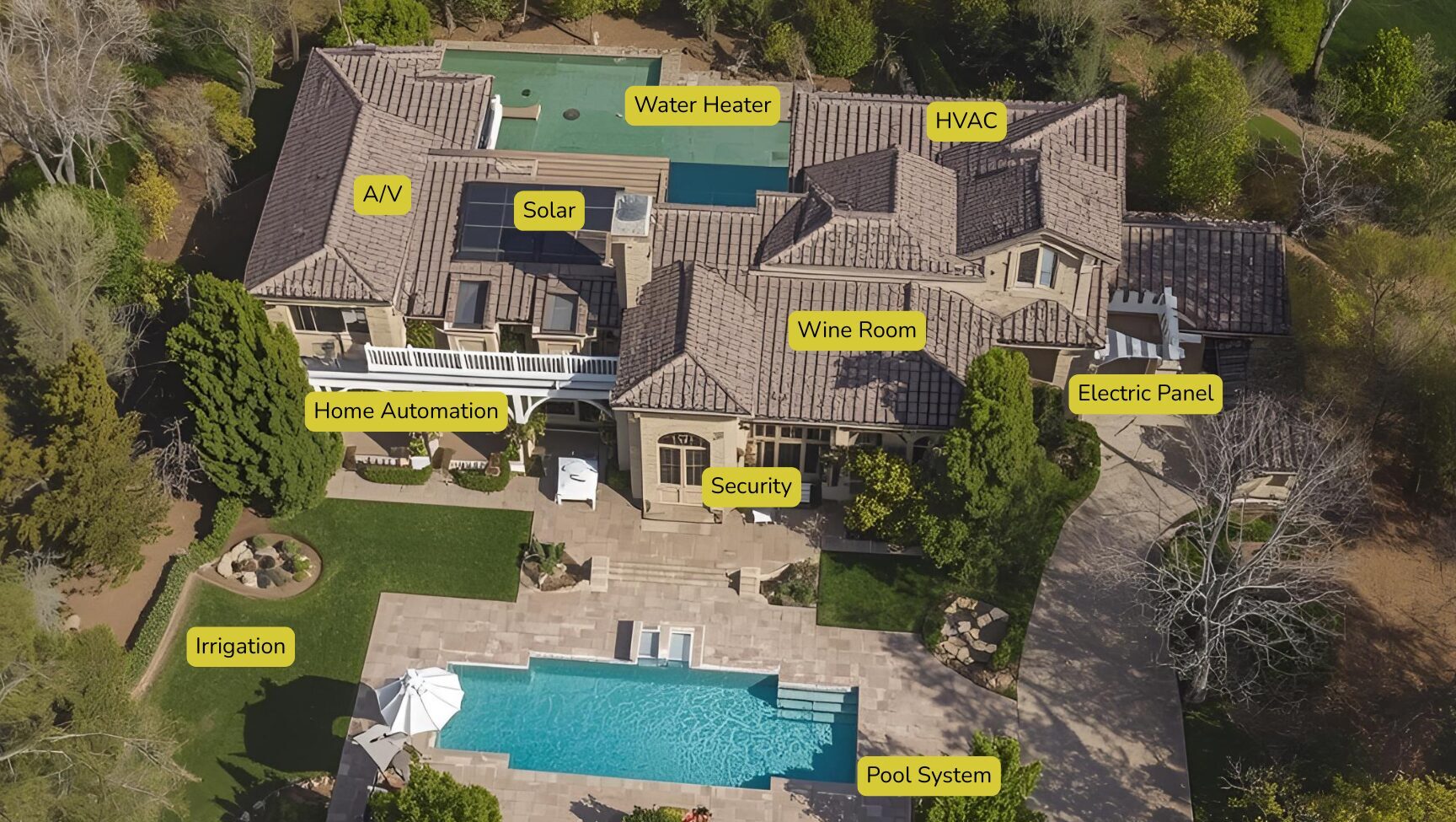
A modern luxury home contains dozens of interconnected systems: HVAC, electrical, plumbing, water heating, security systems, smart home automation, integrated audio and video, drainage, foundation systems, roof systems. Each requires specialized expertise. Each operates on its own maintenance schedule. Each involves different vendors.
A vehicle has one expert. A luxury home requires dozens.
Consider the coordination challenge. Your HVAC specialist doesn’t know your electrical situation. Your plumber doesn’t coordinate with your security system installer. Your A/V expert doesn’t track your water heater’s service history. No single person sees the complete picture. Systems that interact aren’t managed together. Maintenance windows overlap, creating disruption.
The result: luxury homes lack the systematic, coordinated oversight that vehicles receive—despite being far more complex and significantly more valuable.
This coordination gap is where most homeowners lose control and face unnecessary costs, disruption, and surprises.
Strategic Oversight: Bridging the Gap
Strategic home oversight means having comprehensive visibility across all your systems, knowing their age and condition, understanding when they’ll need attention, and coordinating the various experts proactively.
It means:
- Comprehensive visibility. Know all your systems, their age, condition, and expected remaining lifespan.
- Unified documentation. All system information, service contacts, maintenance history, and schedules exist in one place.
- Proactive coordination. Plan which systems need attention, sequence the work strategically, and coordinate vendors to minimize disruption.
- Centralized expertise. Someone who understands how your home’s systems interconnect and can manage the various specialists effectively.
The outcome: your home operates like your vehicle—predictably, smoothly, with minimal surprises and maximum efficiency.
Two Paths to Strategic Oversight
Strategic oversight doesn’t require a single approach. Your circumstances determine what works best.
Path 1: Self-Management with Comprehensive Tools
You maintain direct oversight yourself but with organized systems and coordination support. You decide what to replace, when, and with whom. This approach works best for hands-on owners who want full control and clarity.
What you need: complete visibility into all systems, clear maintenance schedules, vendor contacts, and a way to track it all centrally.
Path 2: Fractional Estate Care
A dedicated part-time advisor manages the coordination of schedules and vendors on your behalf. Think of it as a personal strategic advisor for your home’s systems and infrastructure. They ensure nothing falls through the cracks.
This approach works best for busy owners who want proactive care without the burden of coordination.
The critical commonality: Both paths require the same foundation—comprehensive documentation and centralized oversight.
The Foundation: Digital Documentation and Coordination
Whether you prefer hands-on management or fractional care support, both approaches depend on one essential element: organized, centralized documentation of all your home’s systems.
This documentation serves as your single source of truth. It captures:
- All major systems and their specifications (HVAC, electrical, plumbing, water heater, security, smart technology, integrated A/V, etc.)
- Age, condition, and expected remaining lifespan for each system
- Maintenance schedules and procedures
- Preferred experts and service contacts for each system
- Service history and relevant notes
For self-managing homeowners: You have instant access to everything you need to make informed decisions, coordinate vendors strategically, and maintain proactive oversight. No more searching for serial numbers or service contacts. No more guessing about maintenance schedules.
For owners opting for fractional care: Your advisor has complete visibility into every system and expert. They can coordinate efficiently, anticipate needs, and schedule vendors on your behalf. You maintain transparency and control while delegating the coordination burden.
In both cases, your home receives the same systematic, proactive care that your vehicle does—but tailored to the complexity of a modern luxury estate.
Strategic Oversight as Wealth Preservation
The irony resolves when you approach home maintenance strategically. Your home—your largest appreciating asset—doesn’t need to be more complicated to maintain than your car. It needs to be more organized.
With the right tools and approach, home maintenance can become as predictable and manageable as vehicle maintenance. The chaos disappears. The costs become anticipated rather than surprising. The asset appreciates reliably instead of depreciating due to neglect.
Your home deserves the same systematic attention you give your vehicle. It’s too valuable not to.
Let’s Discuss Your Home’s Strategic Oversight
If you’d like to explore how strategic oversight could protect and enhance your Marin County estate—whether you prefer to manage it yourself or with fractional support—let’s have a conversation about what that looks like for your home.
Schedule a consultation to discuss your estate’s strategic overview.